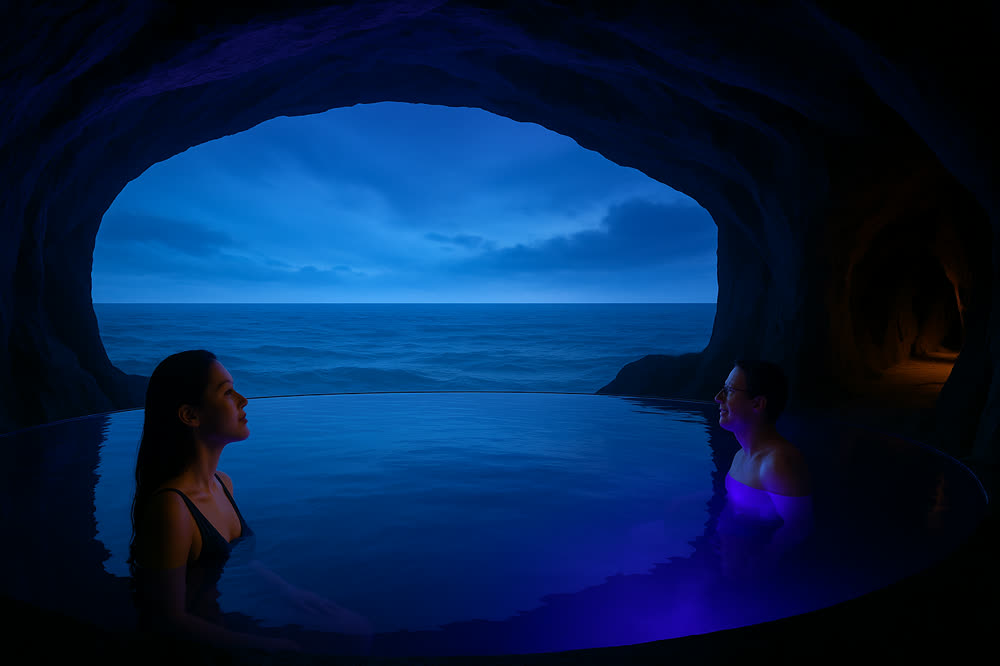
Kingfisher Resort Vancouver
Immersive Experience for Healing Caves



Light, motion and story mapped onto real surfaces —
so the space itself becomes the thing people watch.
SuperPixel builds projected content for building facades, stage sets and interior surfaces, working with brands worldwide. Concept, design, animation and technical planning stay in-house, with teams in Vancouver, Melbourne, Singapore and Jakarta delivering remotely wherever the venue sits.
Trusted by



































Immersive Experience for Healing Caves
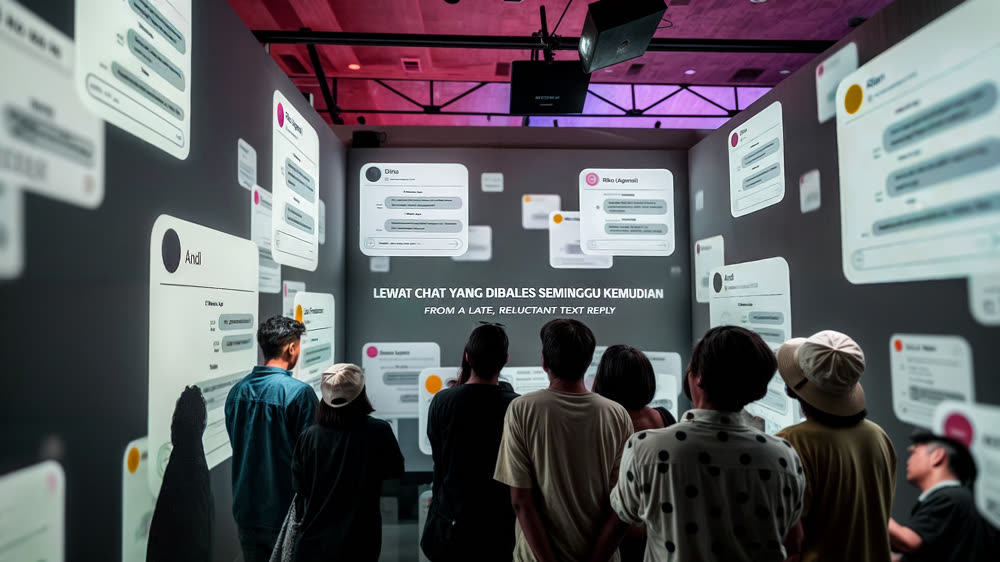
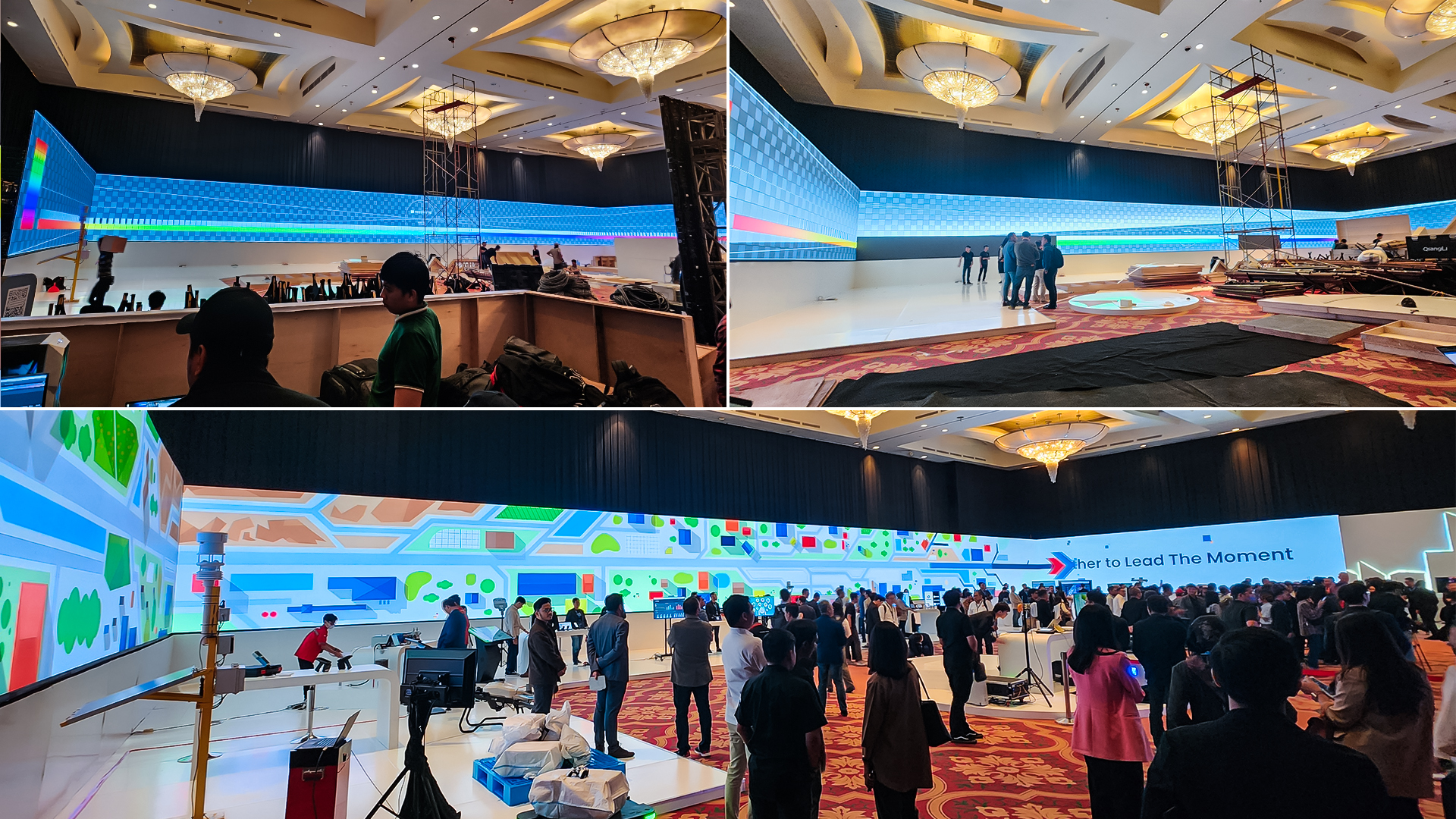
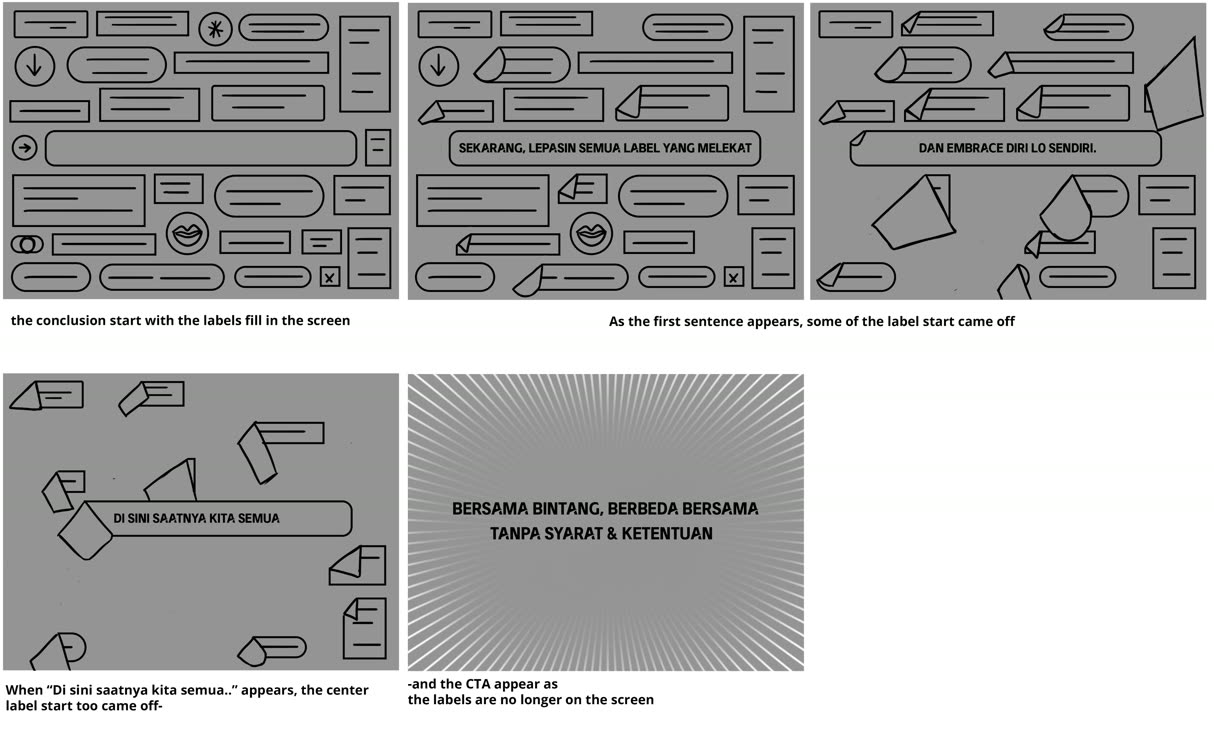
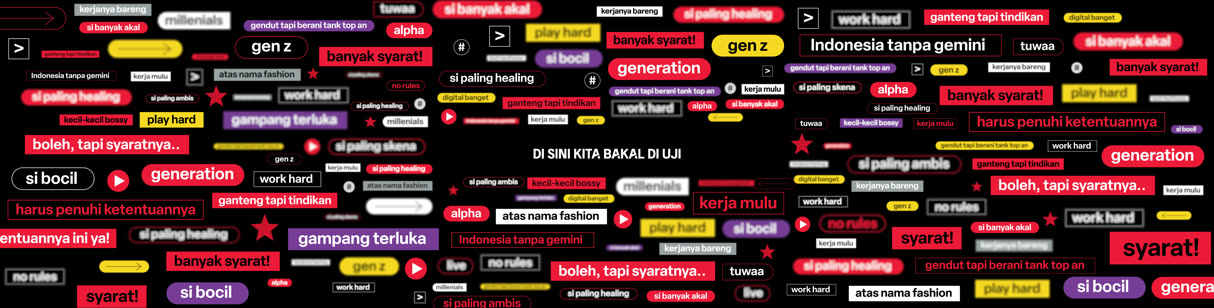
Projection Mapping for “Dunia Tanpa Syarat” Brand Campaign
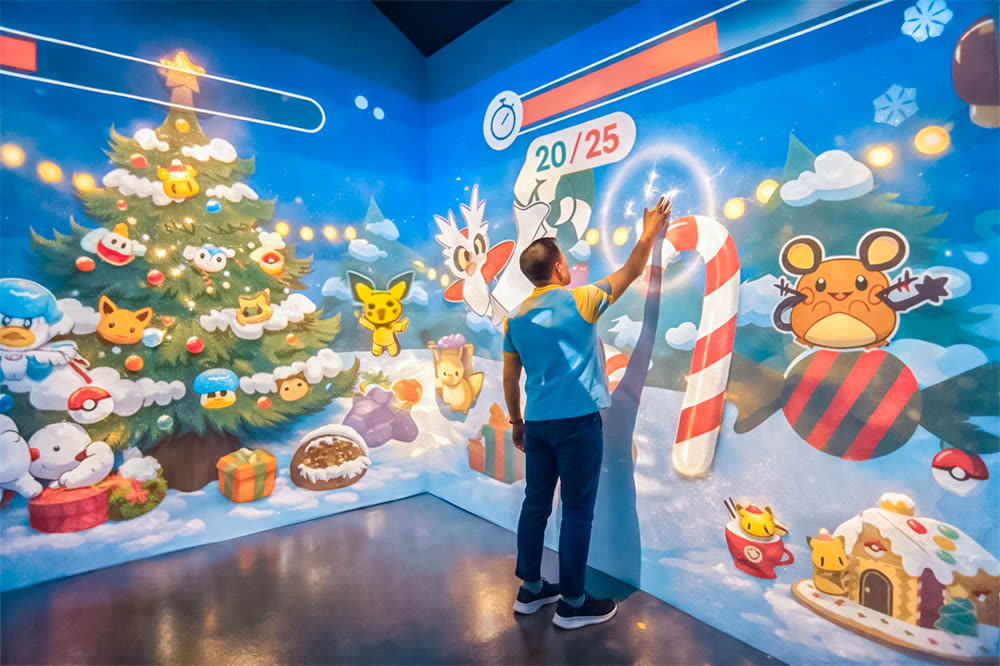
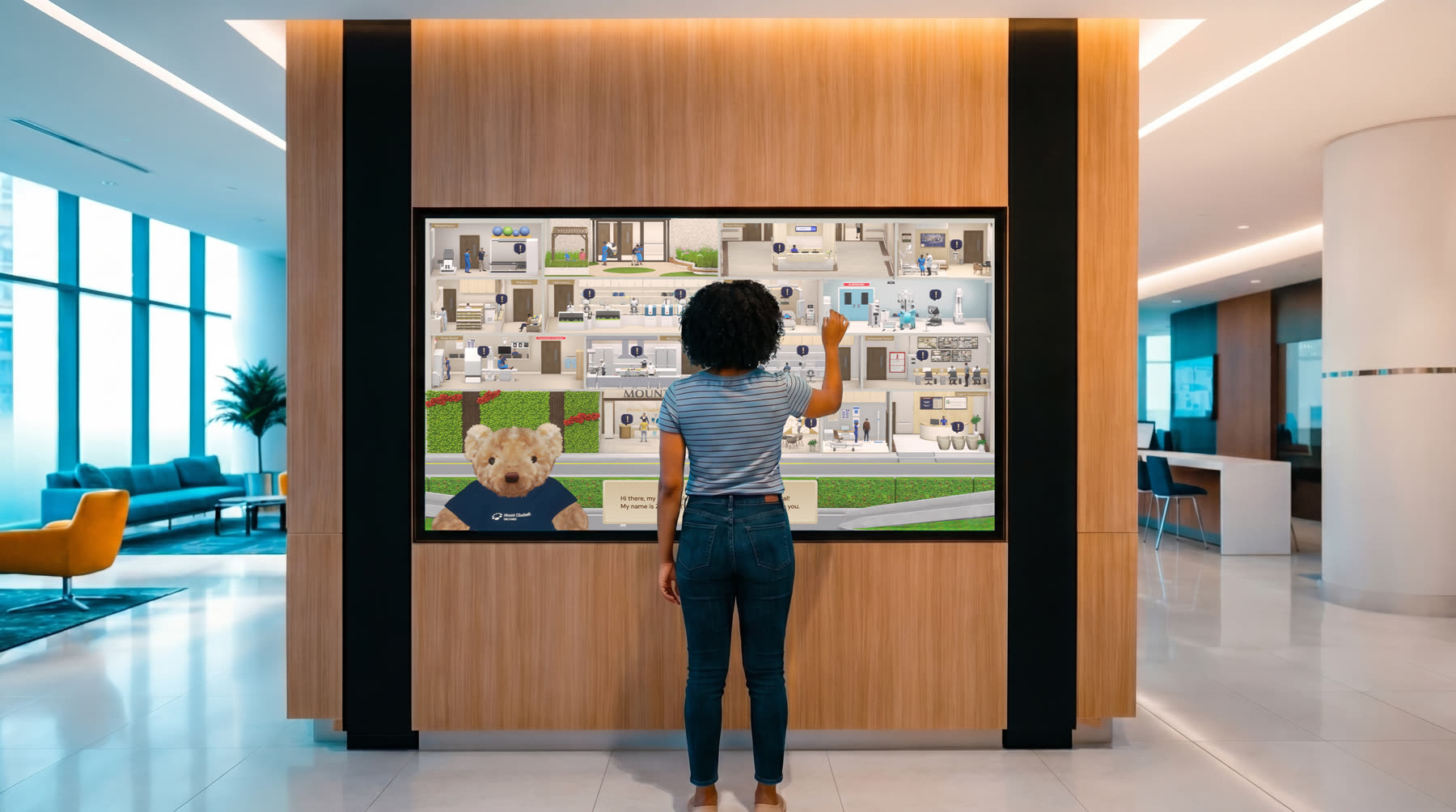
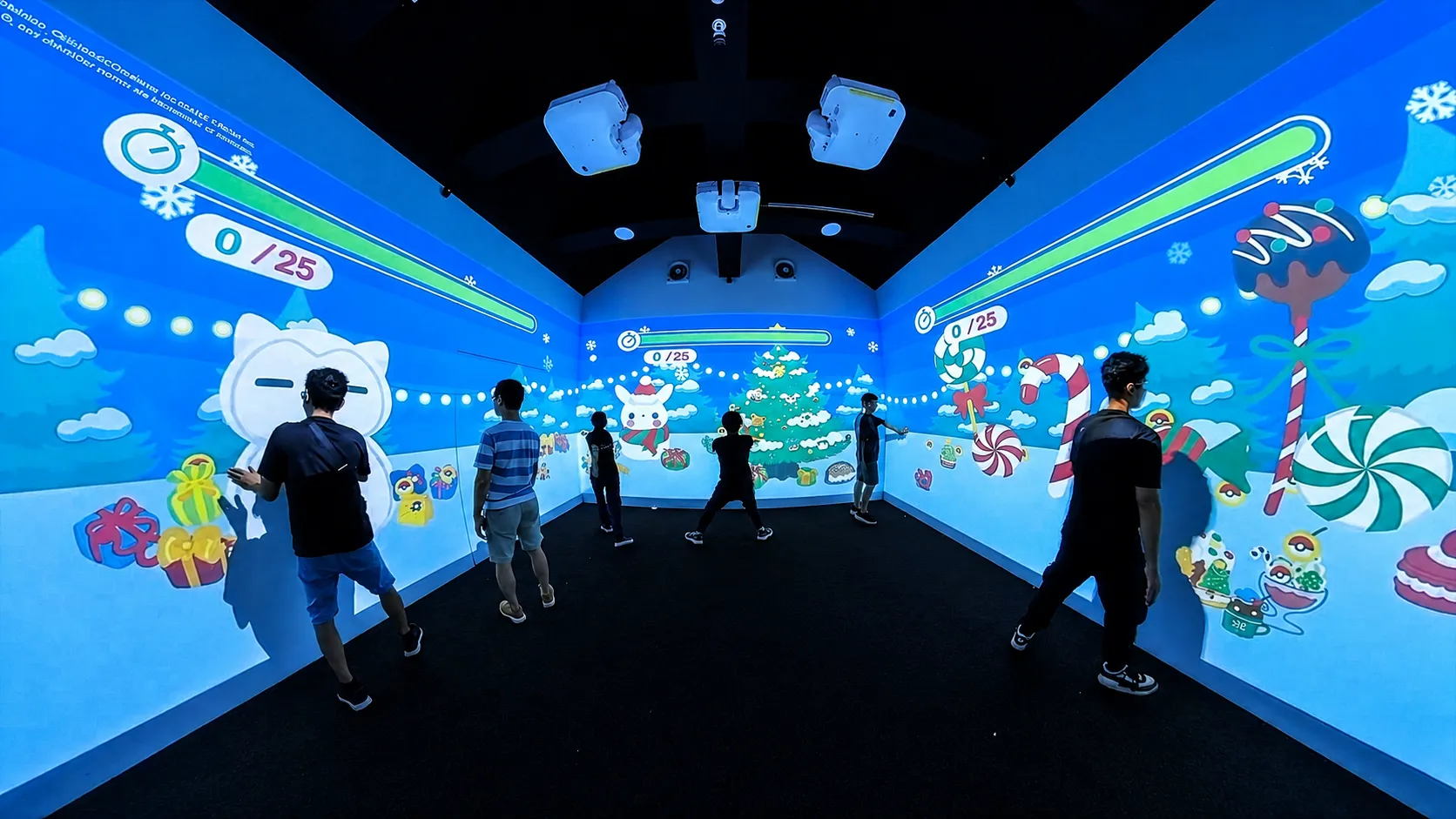
Interactive XR Experience at Suntec City
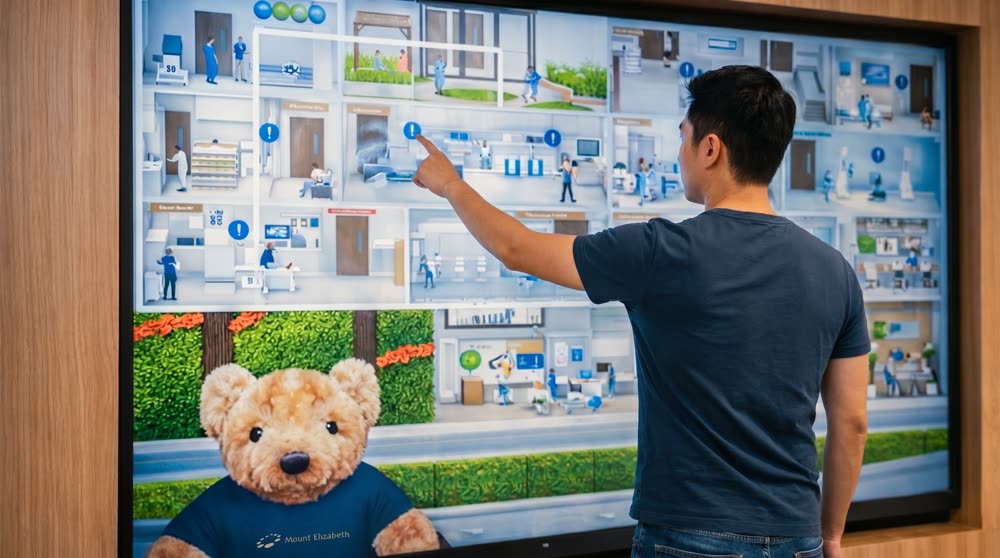
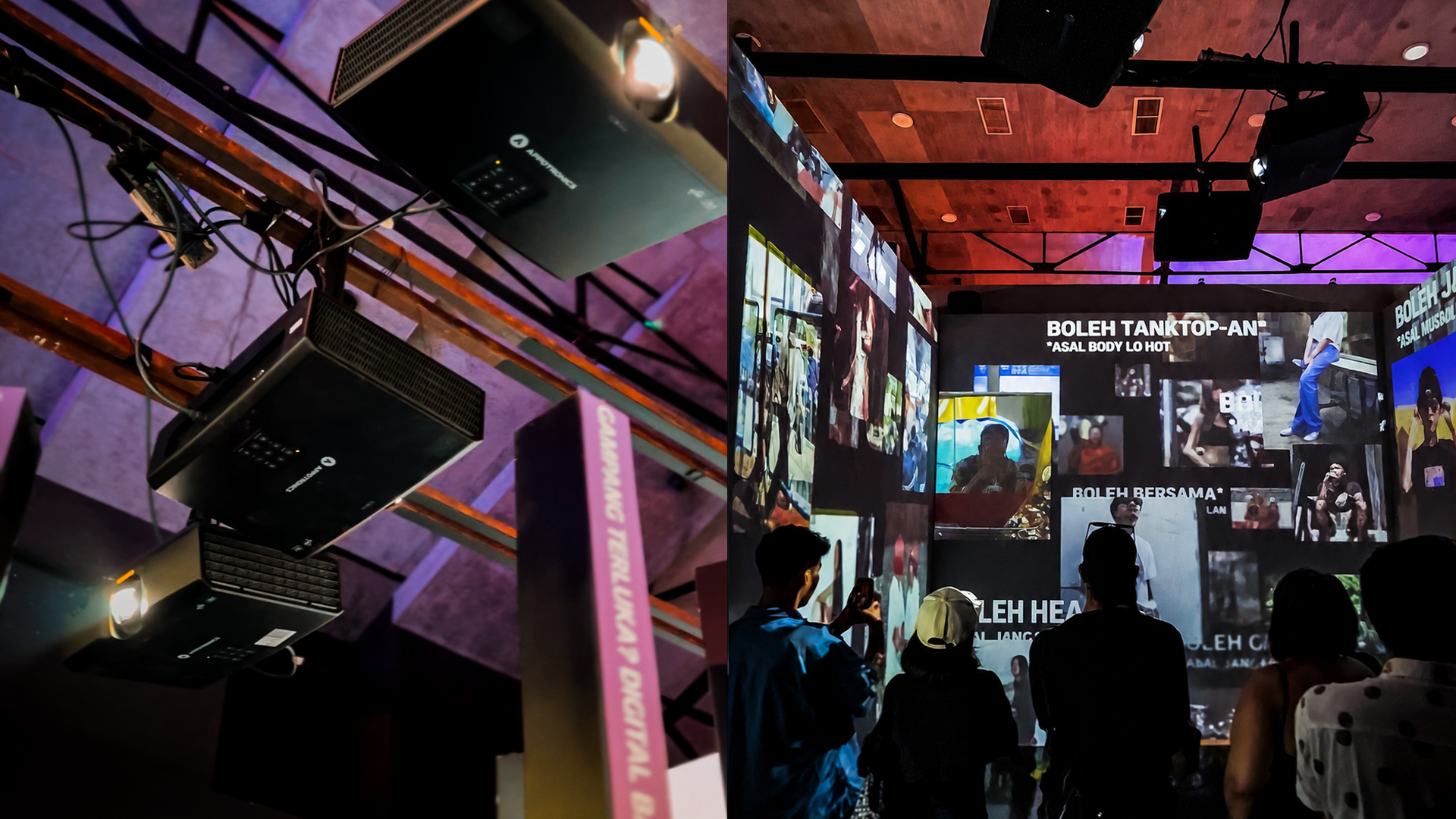
LizGallery Digital Art
Ask an audience to look at a screen and they know exactly where the content stops. Projection takes that boundary away: the wall, the set piece or the structure itself carries the image, and people end up inside the work rather than in front of it — something they can walk through, react to and pass on.
Every sequence is cut to the geometry of one particular surface, which is why the format sits as easily on an exterior during a city celebration as it does on a stage backdrop, a shaped interior wall, or a gallery planned as one continuous environment. Where a brief asks for more than fixed playback, sensors, real-time triggers, AR layers or VR content can run on top of the projected image.
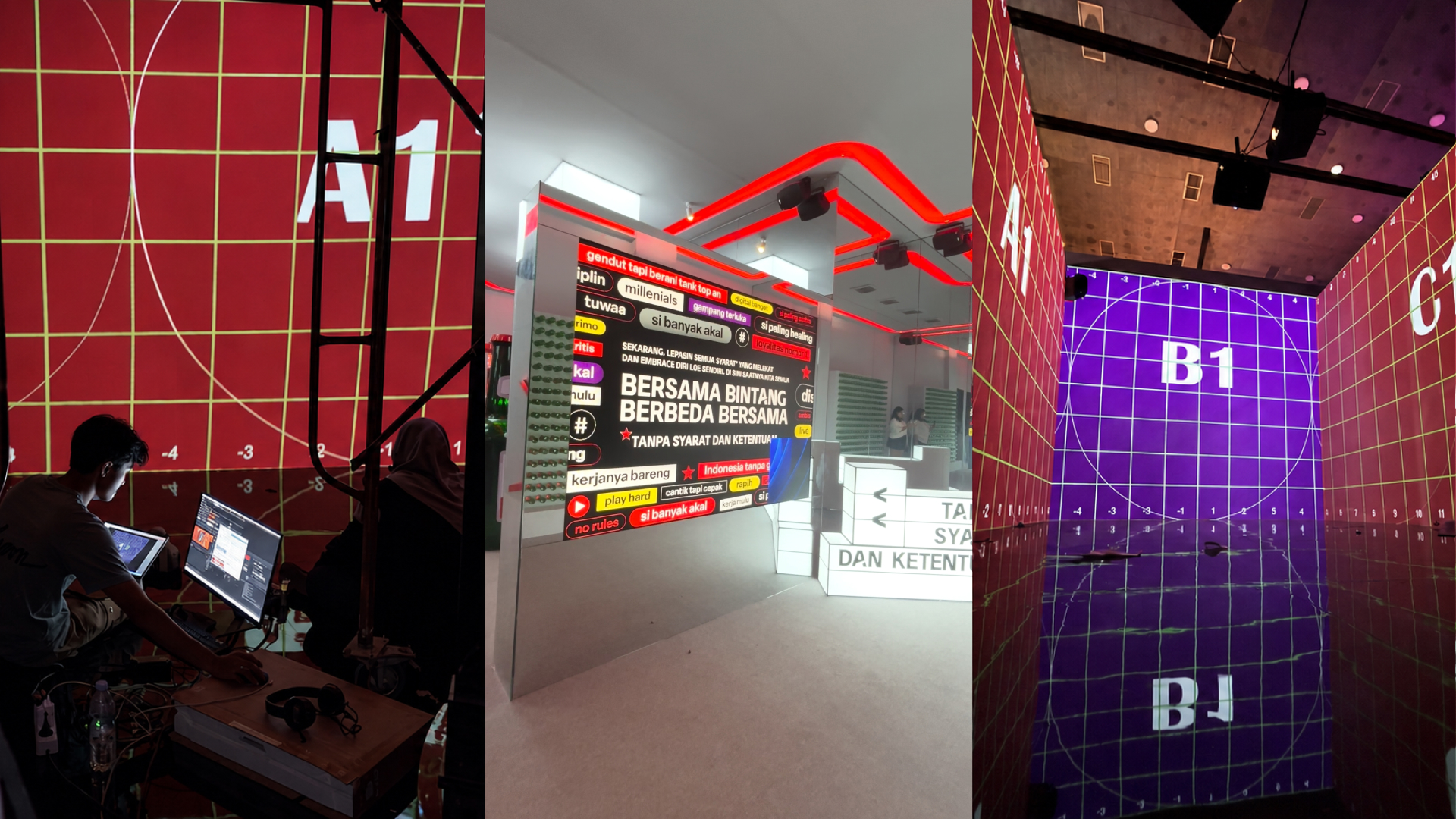
Two questions come first — what the surface itself can hold, and where the audience will be standing
while it plays. The creative route and the technical route are drawn together from those answers.
Facades, plazas and large exterior structures, where the building’s own geometry decides how each sequence gets built.
Best For:
Building Launches / City Celebrations / Anniversaries / Public Landmarks / Large-format Storytelling
Live rooms, where the visuals have to land on cue with the speaker, the reveal, the music and the lighting plot.
Best For:
Gala Nights / Keynotes / Award Shows / Conference Stages / Brand Events
Walls, ceilings, columns and shaped surfaces inside a venue, mapped so the room carries the content instead of a screen.
Best For:
Lobbies / Atriums / Showrooms / Hotel Interiors / Corporate Spaces
Projected content that reacts in real time to touch, movement, cameras or sensors rather than running as a fixed loop.
Best For:
Flagship Stores / Science Centres / Airport Terminals / Trade Show Stands / Campus Spaces
Multi-surface rooms, galleries and visitor routes, planned so projection, screens, sound and interaction work as one environment.
Best For:
Visitor Centres / Museums / Touring Exhibitions / Immersive Rooms / Cultural Programmes
A predictable five-step process. No surprises, no scope creep.
Brief, audience, message, success metrics
Script, style frames, storyboard
Illustration, animation, sound design
Two structured rounds of revision
Final files, cutdowns, captions
FAQ
The technical half of the job sets the pace as much as the creative half. A compact interactive piece or a single-surface show can be turned around in weeks, while a large facade production or a full exhibition environment needs room for content production, technical setup, testing and installation. Bringing us in early usually means fewer compromises later on.
Hardware needs are something we advise on, and the kit itself is normally handled together with technical partners, event teams or the venue’s own vendors. Which side carries what varies from one project to the next.
Re-use is realistic, and it is easiest when the second location is already on the table while the content is being designed. Where two spaces differ in shape or size, sequences get re-mapped to the new dimensions rather than rebuilt from nothing. Tell us the full run of venues up front and the build can be planned around all of them.
No two shows price the same way. What moves the figure is the scale and complexity of the projection area, how much original animation is produced, the number of scenes, whether an interaction system is involved, the hardware the show calls for, and how tight the timeline is. Send the brief and the venue details and we will scope a realistic range against them.
Yes — most projected work pulls from several disciplines at once. Sound design and motion graphics sit next to live-action film, 3D visuals and 2D animation, with interaction design or AR and VR layers added when the experience calls for them.
Both ends. The final stage is delivery support on site; working back from there, the same team covers technical planning, interactive content, animation and visual design, and before any of that, storyboarding and the concept itself. One studio holds the thread from the first idea to the night it runs.
TESTIMONIALS
SuperPixel can be trusted to deliver creative animation work. Their experienced team is easy to work with, always available to guide us, and clear in managing project timelines and expectations. It has been a breeze working with them.


The event went smoothly, and it was a successful New Year's Eve celebration for us. Thank you, SuperPixel, for all the work and support you put into making it happen.
The work SuperPixel has provided us has been nothing short of great. Their revisions were spot on, and the final result matched what we had in mind. It has been a pleasure working with the team.

Really enjoyed working with SuperPixel, they are able to fully understand the creative needs of different projects given and deliver the animations accordingly. At the same time, the team is also very accommodating, clear and quick with their works.

The visuals were heartwarming and beautifully captured the story we wanted to share. It was a fantastic collaboration! The team's creativity and dedication brought our idea to adorable character, amplifying our message in a powerful way.
The animations enhanced our campaign! Delivering a polished and impactful message. The team's creativity and adaptability brought our vision to life effortlessly.

Send the venue, the date, and whatever reference exists — a phone photo of the wall is enough to start.
You’ll get our first questions back, plus a clear next step.